 |
Thursday, December 8, 2016
How 19th century industrial growth changed America forever
This image is a cover for a book based on the Industrial age. The title of the book is very important, because the book encompasses the many major business techniques and innovations that came about in the late nineteenth century, and then convinces the reader of the significance of this industrial growth. The Images illustrated on the cover of the book portray the changes in industry, as they are occurring, and are meant to peak the interest of the reader, before they even open the book. The questionable phrase used in the book title, combined with the factual action images on the cover, also add a bit of suspicion to the readers thoughts. When the reader opens the book, they will see the list of major innovations, and understand their significance, which will all link back to the title page.

Wednesday, November 30, 2016
Industrial Supremacy
Today in class we watched a CNN documentary on the child labor problems in the coca production industry. There were a few things that I was very surprised to find. For one, I never knew that large corporations used intense child labor to raise production rates of their product. The video was very interesting and gave me an insight that I never had about the cocoa industry, which can relate to all large corporations. There is a problem with child labor, and now it is being brought into the limelight, because of a powerful increase in technology. Technology now allows the whole world to communicate and it brings people awareness of these issues. As soon as people know about the labor issues that a large corporation has, it must then make proper changes to keep their product selling. Technology has come no where close to solving the whole problem, but it now works as if a magnifying glass for consumers to see the truth about large companies. Now as a result, change is being embraced
Friday, November 18, 2016
Smoke Signals essay
The movie Smoke Signals is a fantastic way for people to see how the true history of Indians impacts daily life. Even Indians today, in modern culture, have deep ties to their roots. Many Non-Indian filmmakers have portrayed Indians in a way that was not historically accurate, but the filmmaker of this movie did a fantastic job of portraying the point of view from the eyes of Indians. Learning their own history gives modern day Indians the ability to learn about their culture, but also hurts them by showing the hardships that their ancestors went through.
Indians have a long history in the United states. In today's modern American culture, it is easy for Indians to lose the true culture of their past. When Indians learn about their history, they can re-connect with their culture, understand why they are the way they are, and where they came from. This is so important to young Indians today, because it gives them the ability to get closer and feel pride to their roots. The movie does a good job of portraying this, in Victors personality, when he is "teaching Thomas to be a real Indian". He claims that Thomas must have pride in himself as an Indian and must have proud and bold facial expressions. He tells Thomas that he must look like a warrior. This is the exact kind of situation in modern day, that Indians must learn their history for. However knowledge of history could also be harmful to Indians as well.
The Indians past is brutal. White people forced them to move west, after they stole their land in the east, then began taking their land in the west, killing them, or forcing them onto reservations. The Indians gave in. They decided to save their lives and let the white people continue to lie to them, murder them, and mistreat them. This is what can be so harmful for modern day Indians to learn. they must learn their history to learn their culture, but they also find out about the brutal hardships that their ancestors went through. This is where the ability to give, that the movie talks about, comes into play. The Indians must forgive their ancestors for giving in and losing their culture to the whites. They must make an effort to preserve Tribal culture in modern day society.
History is important for everyone to learn. It tells us who our people once were, and what happened in the past, to make our lives the way that they are today. It gives us insight about where we came from and how to correct the mistakes of our ancestors. This is even more so important to the Indians.
Indians have a long history in the United states. In today's modern American culture, it is easy for Indians to lose the true culture of their past. When Indians learn about their history, they can re-connect with their culture, understand why they are the way they are, and where they came from. This is so important to young Indians today, because it gives them the ability to get closer and feel pride to their roots. The movie does a good job of portraying this, in Victors personality, when he is "teaching Thomas to be a real Indian". He claims that Thomas must have pride in himself as an Indian and must have proud and bold facial expressions. He tells Thomas that he must look like a warrior. This is the exact kind of situation in modern day, that Indians must learn their history for. However knowledge of history could also be harmful to Indians as well.
The Indians past is brutal. White people forced them to move west, after they stole their land in the east, then began taking their land in the west, killing them, or forcing them onto reservations. The Indians gave in. They decided to save their lives and let the white people continue to lie to them, murder them, and mistreat them. This is what can be so harmful for modern day Indians to learn. they must learn their history to learn their culture, but they also find out about the brutal hardships that their ancestors went through. This is where the ability to give, that the movie talks about, comes into play. The Indians must forgive their ancestors for giving in and losing their culture to the whites. They must make an effort to preserve Tribal culture in modern day society.
History is important for everyone to learn. It tells us who our people once were, and what happened in the past, to make our lives the way that they are today. It gives us insight about where we came from and how to correct the mistakes of our ancestors. This is even more so important to the Indians.
Thursday, November 10, 2016
Native American Names
It is so important to learn about Native American History, because it is all around us today. Car names, like jeep cherokee and pontiac aztec. Red Man chewing tobacco and Mohawk Vodka. Apache and Comanche helicopters. Florida State Seminoles, Washington Redskins, Kansas City Chiefs football, Atlanta Braves, and Cleveland Indians baseball. Even the saying "Geranamo" and the Navaho weaving art. All come from Native Americans, and we can only understand life better, by learning Tribal History.
Monday, October 31, 2016
Frontier News
I read one newspaper in class today. It was from Butte, MT in 1880. The paper was very interesting. It did not give any specific news, but gave lots of interesting advertisement and real estate claims. In the Butte newspaper there were the different train stations in the area, all of the cities that these trains traveled to, and the date and time that they departed. This shows me that train was they only quick way of travel in this area at the time and how important it was to advertise the train. I then saw 15 "Applications for Patents", which were claims made by different miners, about the location and descriptions of their gold mines. There was up to 20 mines in the area, so this led me to believe that Butte was a large mining town, and that was their source of income. Finally, I saw an add for an old bar in the down town "Deer Lodge" district of Butte, the add claimed that they had fresh ale and liquor made in Chicago, St. Louis, and Milwaukee. The add made it seem like everyone needs to drink there, specifically because the booze came from the big cities to the east. This showed me that people in the frontier still relied on the East U.S, to supply them with everything that they need to survive, and that people still favored eastern goods.
https://bhpioneer.newspapers.com/image/34887386/?terms=Montana
https://bhpioneer.newspapers.com/image/34887386/?terms=Montana
 |
| Miners in the Deer Lodge district. |
 |
| First ever bar in Butte |
 |
| Mining Town |
Monday, October 10, 2016
Organ Trafficking in China
- Organ Trade has become more popular, despite the laws against it, being legalized in Australia and Iran.
- Organ Trade is most common in Europe and lower Asia. In China, the Organ Trade has become so popular that it nets 1 billion U.S dollars annually.
- The practice murders innocent people, with the goal of harvesting organs. tens of thousands of people die every year.
- an estimated 90,000 people were on an organ waiting list as of 2011, with the numbers growing.
- 10,000 organs are transplanted in China every year.
- The large group in china, that is believed to be the ones being killed for organs is the people of the Falun Gong- a religious group banned by Chinese Gov.
- Attorney David Matas and David Kilgoure, a member of Canadian parliment, set out to research the sudden deaths of these people and they found hard evidence.
- The people harvesting the organs on the other hand, were hard to find and stop, so this is an ongoing fight today
Tuesday, September 27, 2016
Learning History Through Film
Film is one of the best ways to show a viewer an important part of history. Using different visuals and sound effects can help portray a part of history, while playing on the viewer’s emotions in ways that a textbook can not. People find things naturally easier to understand, if they see them with their own two eyes rather than looking at printed words on a page. When a viewer critically views a movie, they can pick up on subtle themes and symbols that they could not find otherwise and it helps create more empathy, which is always important in trying to understand history. Movies may change specific facts in history, but the message stays the same and the visual and audible effects give the audience insight that is far greater than that of a book. These techniques were used best in the movie Glory, and the movie Twelve Years a Slave, to portray important pre-Civil War history.
The movie Glory focuses through the eyes of Robert Gould Shaw, the commanding officer of the 54th regiment, one of the first ever black regiments in the Union. The idea of this was very debated at the time, because it begged the question of whether or not black troops could fight as hard and learn as quick as white soldiers.(Roger Ebert Review) The movie has a few very important key moments that show the black soldiers are tougher than white ones, and learn quicker as well. The scene where the soldiers are angered about receiving lower wages than white soldiers, so the entire regiment tore up their paychecks, shows the pride that the soldiers have in their hearts and that they are sick and tired of being treated second best after the previous years.(Roger Ebert Review) Then there was a scene where the soldiers are told that they would be captured and returned to slavery, if caught in battle by confederates, and that full discharges would be offered in the morning. The next morning, all of the soldiers are still there. This shows their courage that they need to be great soldiers.(New York Times Review) Finally the scene where the soldiers charge fort wagner, portrays both their pride in their country, but their courage as men. (New York Times) The difficulty that this filmmaker faced, was the ability to portray these facts, while adding the right amount of fiction and effects, to grasp emotion from the viewer in order to make a more understandable case for the situation. The filmmaker did a fantastic job of this. There was a real 54th regiment, and the soldiers that were main characters in the movie were real as well. An 1800’s newspaper, written by abolitionist, William Lloyd, provides a ballistics report on the 54th regiment’s march on Fort Wagner. This was similar to the battle scene in the movie. (54th Newspaper William Lloyd) The movie Glory had the perfect mix of facts and emotion to create a truly spectacular film.
The movie Twelve Years a Slave had a similar effect on viewers. The movie came after the book, yet the movie was so much more popular and won the award for best film. This movie described the factual experience of Solomon Northup, a free man who lived in New York with his family, and was kidnapped and sold into slavery where he spent the next twelve years of his life. This movie used much more emotion and effects than facts, because it was necessary to understand the horrors that Solomon went through in an empathetic way. “The functional marriage of form and content was everything for this film.” (The Guardian Review) The movie used a combination of sound effects and punishment, Playing the racist songs that the slaves were forced to sing, while showing the visual of slaves being beaten half to death. For example, The “Run N***er Run” song being played, and the slave owner forcing Solomon to beat daisy almost to death. (The Guardian Review) The filmmaker had to use brutal violent imagery and powerful sound effects, to make the viewer feel almost as if they were there. (Rotten Tomatoes) said the same thing “The movie gave us empathy and insight, lending just enough historical precedent to grasp the viewer’s attention by giving them something real and powerful.” Twelve Years a Slave, like Glory, gave that perfect mix of facts and power, to explain the story. Pictures taken on (History.com) provided facts about the lives of slaves as well. There were pictures of slave quarters, torture equipment, and plantation houses, all too similar to the ones in the movie. This was truly a spectacular film as well.
So I would say the main point to take away from this is that movies do provide a better atmosphere for learning about history. They provide the facts that books do, with the added visual and audible effects, to pull empathy and emotion out of the viewer. Both movies did a fantastic job of that.
 |
| Solomon Northup, the main character from 12 years a slave. |
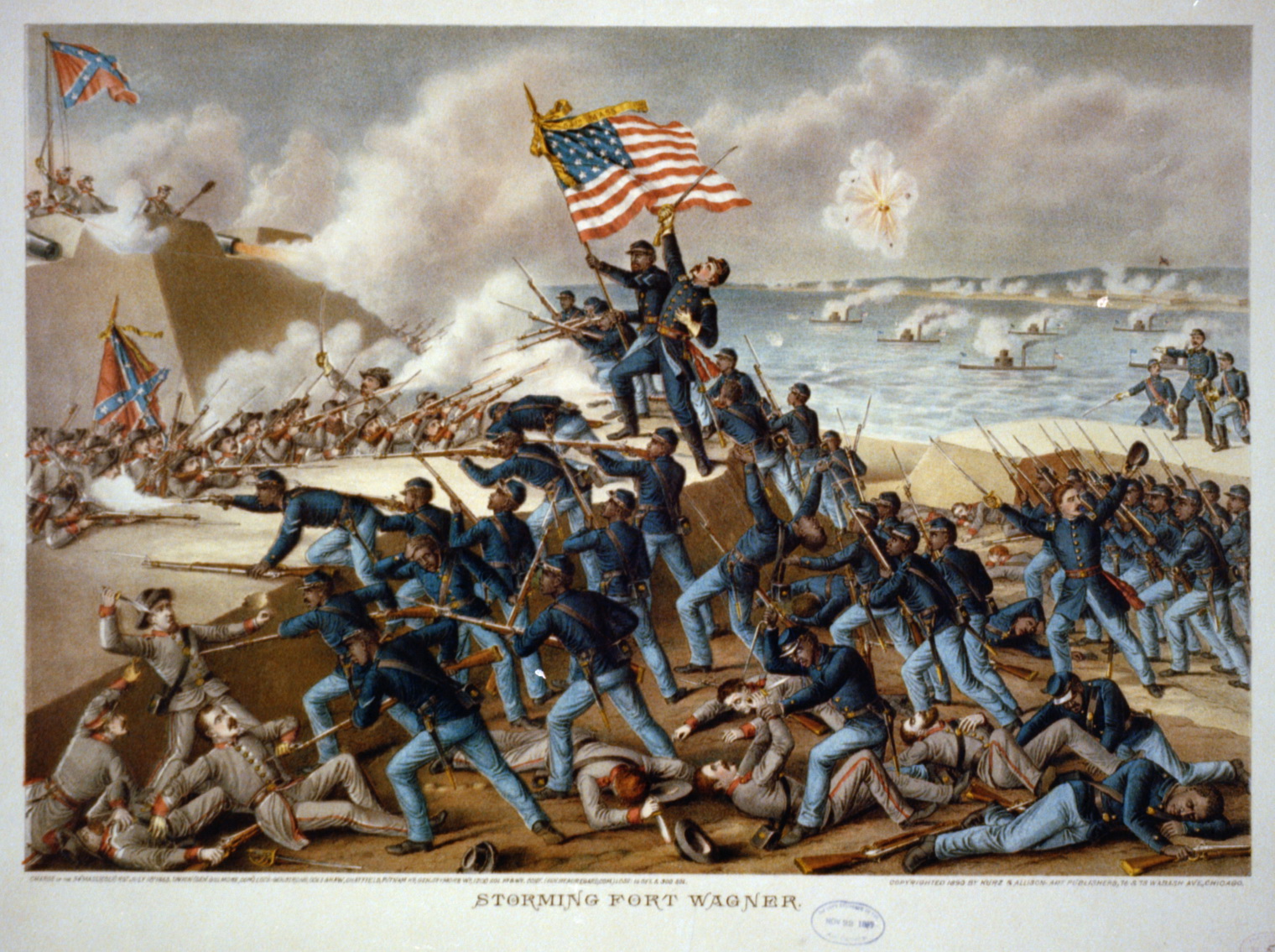 |
| The second battle at Fort Wagner. |
 |
| Small quarters, used to house slaves. |
 |
| Slave shackles similar to the ones used in 12 years a slave |
 |
| Propaganda for the 54th regiment |
Bibliography:
Wednesday, September 14, 2016
Reflection on Paraphrase practice
In the past few class periods we practiced paraphrasing a statement from a source, in our own words, and incorporating a direct quotation from that source to make our point stronger. This was very helpful to me because in the past two years of high school, teachers have only expected us to know these skills, without going into depth on how to use them properly. This exercise answered all of the questions that I had about the skill, and gave me the confidence to use these skills when I write. I now understand that I should only use a direct quote when it adds power and style to my writing. I should always make it clear, from context, that I understand the full meaning of the quote that I am using. I understand that whether I am quoting, or paraphrasing, I must be transparent about the source that I am using, and how I am using it. I understand that if I use another authors exact words of phrases to any extent, I must use quotation marks and give that person credit. I know that if I use another author's presentation of facts or ideas, but put them in my own words, I must have a good reason, and give them credit. Finally, I understand Hyperlinking, and now there is no reason that I shouldn't be transparent about the source that I am using.
Monday, September 12, 2016
Practicing incorporating a quotation
I think that the movie Glory portrays a very important and interesting moment in history in an accurate and dramatic fashion. I thoroughly enjoyed the movie, because it had me hooked and locked in to every twist and turn of the plot. This movie was so interesting, because the idea of letting African Americans fight for the Union in the Civil War was a highly debated topic at the time. There was so much skepticism, raising the question could African Americans learn to be soldiers as well as whites, and could they fight hard? The author of the Roger Ebert web-site stated that, "These men are proud to be soldiers, proud to wear the uniform and also too proud to accept the racism they see all around them, as when a decision is made to pay black troops less than white. Blacks march as far, bleed as much and die as soon, they argue". I agree with this accurate statement from the Roger Ebert review because in the movie, the 54th regiment not only learned as quick and fought as hard as white soldiers, but their racial hardships made them stronger fighters. They were extremely proud to be a part of something and represent their country, that they knew that they would die protecting it. The best example of this in the movie is when the soldiers of the 54th regiment refused to accept a paycheck, because the wage was smaller than the ones given to white soldiers, Followed by the heroic attempt to take Fort Wagner.
Paraphrasing practice
"It is up to the troops themselves to convince him they can fight - and along the way they also gently provide him with some insights into race and into human nature, a century before the flowering of the civil rights movement. Among the men who turn into the natural leaders of the 54th are Trip (Denzel Washington), an escaped slave, and John Rawlins (Morgan Freeman), first seen in the film as a gravedigger who encounters the wounded." "Shaw on the field of battle. (RogerEbert)
(My Paraphrase)
It is a very debated topic, wether or not black soldiers could learn quickly and fight as well as the white soldiers could. The 54th regiment must prove to their leader, Robert Gould Shaw, that they have that ability. As much as Shaw taught the men how to be soldiers, he began to understand the racial issues and inhumane treatment that his group has gone through. Even with the difficulties that Trip (Denzel Washington) faced at first, he took on a leadership role in the end, along with fellow soldier Rawlins (Morgan Freeman). Rawlins was a gravedigger that first encountered Shaw when he was wounded in battle.
(My Paraphrase)
It is a very debated topic, wether or not black soldiers could learn quickly and fight as well as the white soldiers could. The 54th regiment must prove to their leader, Robert Gould Shaw, that they have that ability. As much as Shaw taught the men how to be soldiers, he began to understand the racial issues and inhumane treatment that his group has gone through. Even with the difficulties that Trip (Denzel Washington) faced at first, he took on a leadership role in the end, along with fellow soldier Rawlins (Morgan Freeman). Rawlins was a gravedigger that first encountered Shaw when he was wounded in battle.
Friday, September 2, 2016
Acceleration of Cotton Production, Through Technology
Acceleration of Cotton Production, Through Technology
Through study of the Cotton Gin, the "Spinning Jenny", and the Power Loom, I learned about how these machines changed the production of cotton forever. While this new technology skyrocketed the demand of cotton, by doubling the productivity, I learned that it also did much more. What I didn't know, before our in class discussion was the true effects that this technology had on slaves and America as a whole. The question was eventually asked, "How was the amount of cotton picked, increased, without the mechanical cotton picker being invented until the 1930's?". Through this, I learned that the amount of cotton picked, was truly increased, because the brutality of slaves on plantations was increased. The slaves had to work harder, in fear of being beaten or killed. There is proof of this, because there are records of whips being manufactured that were specifically meant for slaves. This truly shocked me. It has now come into question in my mind that, if brutality of slaves was never increased, would have been abolished, and would there be a Civil War?

Through study of the Cotton Gin, the "Spinning Jenny", and the Power Loom, I learned about how these machines changed the production of cotton forever. While this new technology skyrocketed the demand of cotton, by doubling the productivity, I learned that it also did much more. What I didn't know, before our in class discussion was the true effects that this technology had on slaves and America as a whole. The question was eventually asked, "How was the amount of cotton picked, increased, without the mechanical cotton picker being invented until the 1930's?". Through this, I learned that the amount of cotton picked, was truly increased, because the brutality of slaves on plantations was increased. The slaves had to work harder, in fear of being beaten or killed. There is proof of this, because there are records of whips being manufactured that were specifically meant for slaves. This truly shocked me. It has now come into question in my mind that, if brutality of slaves was never increased, would have been abolished, and would there be a Civil War?
Monday, August 29, 2016
Sympathy vs. Empathy
The difference between empathy and sympathy is an important one. Empathy may often lead to sympathy, but the two are completely different. Sympathy is having feelings of pity for someone after they have gone through something. Having empathy however, just means to understand what is happening to a person or a certain group of people, or understand why they do what they do. Empathy is essential to historians because when looking back, you must understand what is happening to people in the particular time period that you are studying, and why whatever event took place happened.

U.S History Timeline
Through looking at the U.S History timeline in class, I remembered the chronological order of the events leading up to the civil war. I learned about the Articles of Confederation and the Constitutional Convention, I learned that New lands came from the Louisiana Purchase and the Mexico War, I learned about the Missouri Compromise, and I learned about the founding of the Republican party. The U.S grew as a Nation because the colonists banned together, acquired more land, established a military and government to stay afloat, and grew in population. The biggest challenges for the new nation were establish a government that could keep the country afloat, and establishing an economy that could support the country. The Citizens of the U.S had to agree with each other, to keep the country united, and the compromises that they made were the reasons that the U.S stayed united until the civil war.

Subscribe to:
Comments (Atom)