Film is one of the best ways to show a viewer an important part of history. Using different visuals and sound effects can help portray a part of history, while playing on the viewer’s emotions in ways that a textbook can not. People find things naturally easier to understand, if they see them with their own two eyes rather than looking at printed words on a page. When a viewer critically views a movie, they can pick up on subtle themes and symbols that they could not find otherwise and it helps create more empathy, which is always important in trying to understand history. Movies may change specific facts in history, but the message stays the same and the visual and audible effects give the audience insight that is far greater than that of a book. These techniques were used best in the movie Glory, and the movie Twelve Years a Slave, to portray important pre-Civil War history.
The movie Glory focuses through the eyes of Robert Gould Shaw, the commanding officer of the 54th regiment, one of the first ever black regiments in the Union. The idea of this was very debated at the time, because it begged the question of whether or not black troops could fight as hard and learn as quick as white soldiers.(Roger Ebert Review) The movie has a few very important key moments that show the black soldiers are tougher than white ones, and learn quicker as well. The scene where the soldiers are angered about receiving lower wages than white soldiers, so the entire regiment tore up their paychecks, shows the pride that the soldiers have in their hearts and that they are sick and tired of being treated second best after the previous years.(Roger Ebert Review) Then there was a scene where the soldiers are told that they would be captured and returned to slavery, if caught in battle by confederates, and that full discharges would be offered in the morning. The next morning, all of the soldiers are still there. This shows their courage that they need to be great soldiers.(New York Times Review) Finally the scene where the soldiers charge fort wagner, portrays both their pride in their country, but their courage as men. (New York Times) The difficulty that this filmmaker faced, was the ability to portray these facts, while adding the right amount of fiction and effects, to grasp emotion from the viewer in order to make a more understandable case for the situation. The filmmaker did a fantastic job of this. There was a real 54th regiment, and the soldiers that were main characters in the movie were real as well. An 1800’s newspaper, written by abolitionist, William Lloyd, provides a ballistics report on the 54th regiment’s march on Fort Wagner. This was similar to the battle scene in the movie. (54th Newspaper William Lloyd) The movie Glory had the perfect mix of facts and emotion to create a truly spectacular film.
The movie Twelve Years a Slave had a similar effect on viewers. The movie came after the book, yet the movie was so much more popular and won the award for best film. This movie described the factual experience of Solomon Northup, a free man who lived in New York with his family, and was kidnapped and sold into slavery where he spent the next twelve years of his life. This movie used much more emotion and effects than facts, because it was necessary to understand the horrors that Solomon went through in an empathetic way. “The functional marriage of form and content was everything for this film.” (The Guardian Review) The movie used a combination of sound effects and punishment, Playing the racist songs that the slaves were forced to sing, while showing the visual of slaves being beaten half to death. For example, The “Run N***er Run” song being played, and the slave owner forcing Solomon to beat daisy almost to death. (The Guardian Review) The filmmaker had to use brutal violent imagery and powerful sound effects, to make the viewer feel almost as if they were there. (Rotten Tomatoes) said the same thing “The movie gave us empathy and insight, lending just enough historical precedent to grasp the viewer’s attention by giving them something real and powerful.” Twelve Years a Slave, like Glory, gave that perfect mix of facts and power, to explain the story. Pictures taken on (History.com) provided facts about the lives of slaves as well. There were pictures of slave quarters, torture equipment, and plantation houses, all too similar to the ones in the movie. This was truly a spectacular film as well.
So I would say the main point to take away from this is that movies do provide a better atmosphere for learning about history. They provide the facts that books do, with the added visual and audible effects, to pull empathy and emotion out of the viewer. Both movies did a fantastic job of that.
 |
| Solomon Northup, the main character from 12 years a slave. |
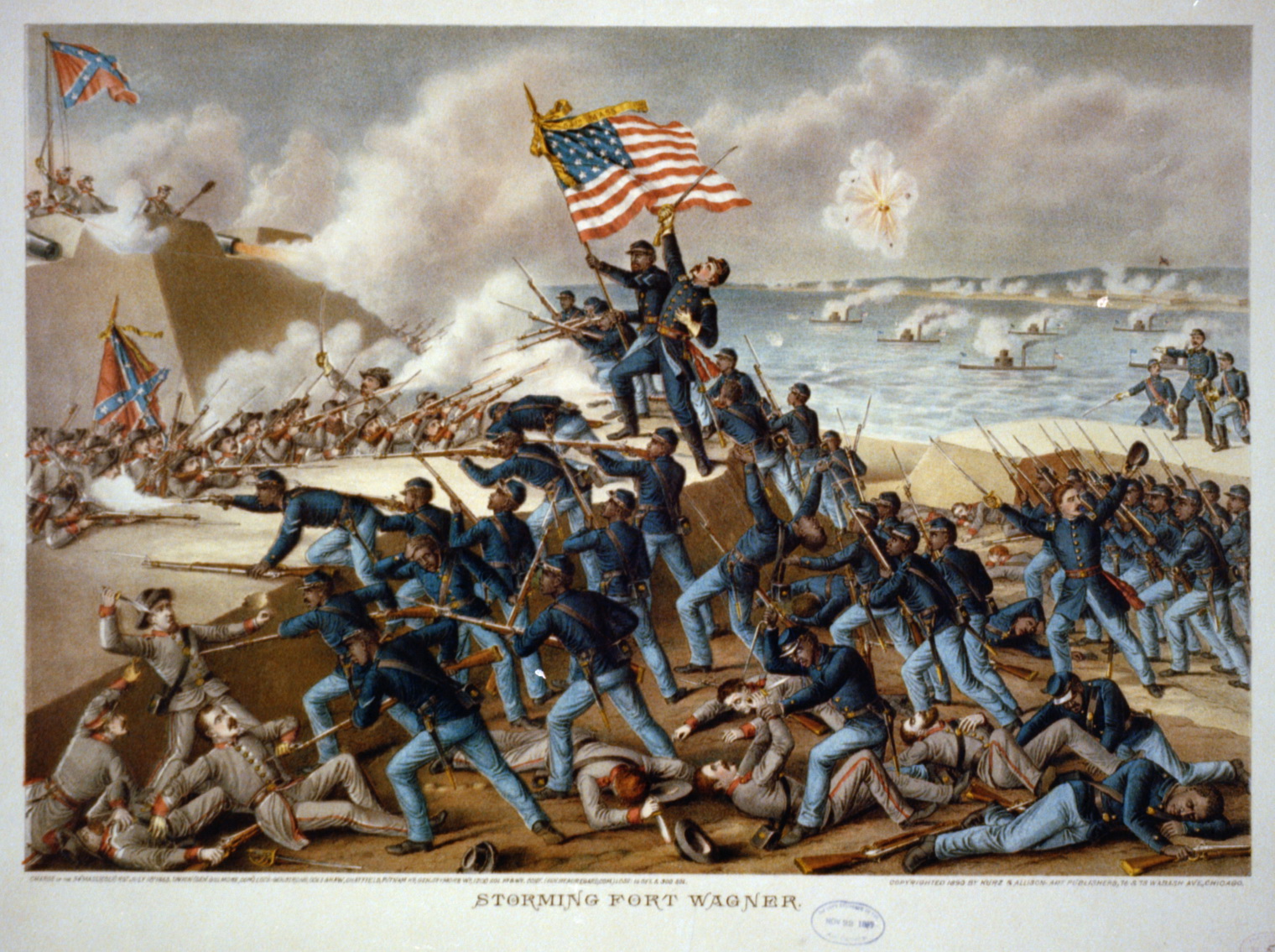 |
| The second battle at Fort Wagner. |
 |
| Small quarters, used to house slaves. |
 |
| Slave shackles similar to the ones used in 12 years a slave |
 |
| Propaganda for the 54th regiment |
Bibliography:

